
Interaction Design is the process that we go through when trying to minimize the negative aspects of interacting with a given system (Preece, Rogers, & Sharp, 2015, p. 2) and create a product that that supports and enhances the way people carry out their lives (Preece, Rogers, & Sharp, 2015, p. 8) In simpler terms, it’s how we make products more intuitive and less frustrating for users.
Interaction Design is one of, if not the most important part of designing almost any piece of hardware or software. While it is definitely possible to use poorly designed products, it’s both frustrating and inefficient to do so even if that product is entirely functional, in that way, time spent now to ensure a product is designed properly can lead to countless hours saved through efficiency, and designing intuitive systems is nothing short of an art, and one that should be appreciated.
That being said, while I may gravitate toward the more nuanced and artistic sides of Interaction Design, it’s important not to ignore the science behind it, the user experience is made up of many different components, and psychology, sociology, and engineering all factor into the final product (Preece, Rogers, & Sharp, 2015, p. 9), and these are all part of the broad term that is Interaction Design.
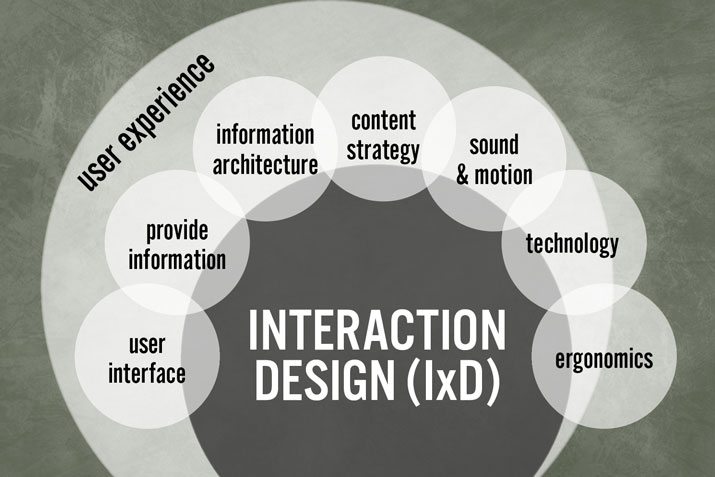
One thing that has struck me throughout the first chapter is that there is no one “right way” to approach interaction design. Every decision that goes into the design of a product whether it is hardware or software, is based entirely in context and design that is good in one context, such as the time in which it was made, may be a bad design in another context. So rather than learning right or wrong, what’s good and what’s bad, to learn interaction design one has to learn how to adapt to the context of the situation. In that way, Interaction Design is almost an art, more than it is a science, and the nuance that goes into it is probably my favorite thing about the topic so far.
References
Preece, Rogers, & Sharp, (2015). Interaction Design: Beyond Human Computer Interaction. West Sussex, United Kingdom: John Wiley & Sons, Ltd.
 Interaction Reflections