
Interface Metaphors are one of the ways in which we make systems more intuitive for users to use by referring to a function of the system using something the user is probably already familiar with (Preece, Rogers, & Sharp, 2015, p. 45) . These metaphors are kind of like shortcuts, by which we are able to quickly and concisely convey information about how the user should approach and interact with our interface
Interface metaphors are one of the most common and recognizable ways in which we design technology to be more intuitive. A computer’s “desktop” and “recycle bin” are both ways in which we use familiar language in order to convey a quick concept to users. A desktop isn’t literally the top of a desk, and there is no actual recycle bin, but with those words, users immediately know the intended function of each feature, as it is similar to an actual physical desktop and the trash bin the user probably has beside their desk.
Throw in “bookmarks”, “folders”, “shopping carts”, and any number of other ways in which we do this, and it becomes clear that using metaphors to describe the tasks certain features accomplish is almost second nature at this point (Preece, Rogers, & Sharp, 2015, p. 47) . Without these metaphors, it would be much more difficult to quickly understand how one might be expected to use these various technologies.
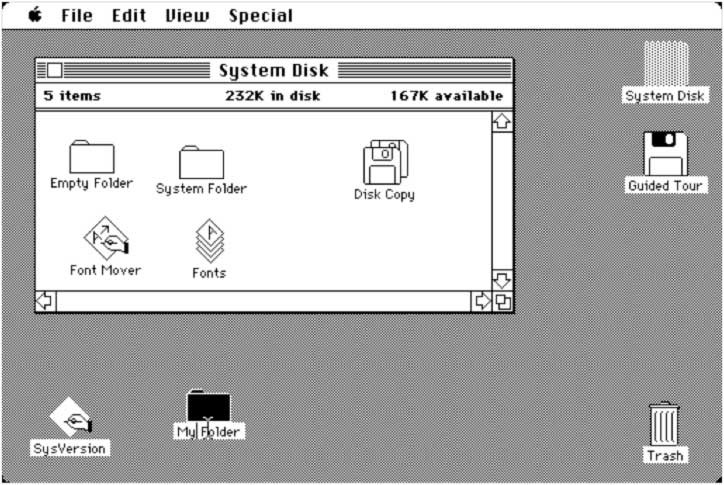
Personally, I never considered how prevalent the use of metaphors was in interface design. Growing up around computers and having one from a very early age, the digital versions of folders, desktops, and the like were almost more understandable than the physical versions as I was introduced to both very early in my life. Thinking about this and how more and more young people are more familiar with the digital version of these metaphors than the physical versions, I wonder how use of these metaphors might adapt and change going forward. Language and its intersection with Technology is always fascinating and seeing both evolve alongside each other is fascinating.
References
Preece, Rogers, & Sharp, (2015). Interaction Design: Beyond Human Computer Interaction. West Sussex, United Kingdom: John Wiley & Sons, Ltd.
 Interaction Reflections