
A high-fidelity prototype is one that mostly looks like the final product will look, and usually offers more functionality than a low-fidelity prototype, usually a very basic, working software version instead of a paper-based mockup. However, a more mechanically functional or detailed model might be considered higher fidelity than say, a rough, static model made with little detail. Fidelity is a sliding scale, and some prototypes are higher or lower fidelity than others.
High-fidelity prototyping is useful for a variety of reasons. First and most obviously, it gives test subjects a better idea of what the final product will actually look like, and how it might actually function. With this context, participants should be able to provide more useful feedback, that can be framed in the context of how the suggestions would be implemented in the final product considering what has already been implemented.
Testing using high-fidelity prototypes can also point out flaws in the physical or technical design of the product as it might be in its final form, and highlight any possible challenges in producing a final product that fulfills the requirements of the project.
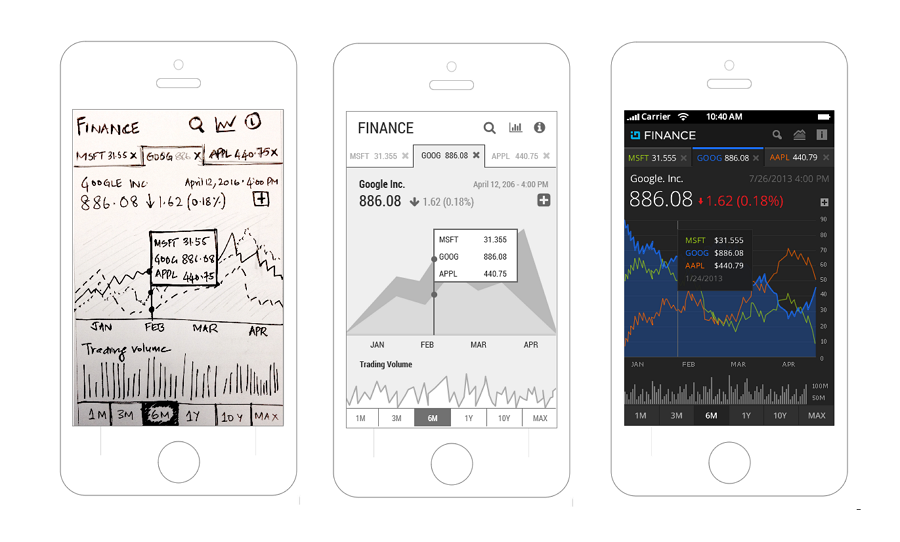
I personally think high-fidelity prototypes are the most useful for testing. It is hard as a test participant to provide useful feedback when you don’t actually know how the final product will look, or function. That being said, it’s understandable that often, high-fidelity prototypes are expensive to produce and it is not feasible to create them until later in the development process. In a perfect world, teams would always have the time and resources to create working high-fidelity prototypes, because they are often the most useful, but realistically, while they are an important part of the design process, they should be used in conjunction with other prototyping methods to produce the best results for a project.
References
Preece, Rogers, & Sharp, (2015). Interaction Design: Beyond Human Computer Interaction. West Sussex, United Kingdom: John Wiley & Sons, Ltd.
 Interaction Reflections